Pledgr · Case study
Goal-setting and community research
I designed and analyzed two Pledgr studies on goal sharing, support, and the timing of goal setting. The research led to product recommendations and exposed a survey-definition problem that I revised.
The starting point
Pledgr needed to understand what people already used to share goals, what support they wanted, and what prompted them to set a goal. The questions also needed to capture how participants themselves understood a goal.
My responsibility
I conducted surveys and participant discussions, organized response tables, analyzed behavior, revised the survey wording, and authored the findings and recommendations. The reports are dated September 2022.
Tools & methods
Survey design · Participant discussions · Response tables · Behavioral analysis · Market research
Goal sharing: study existing channels and unmet support
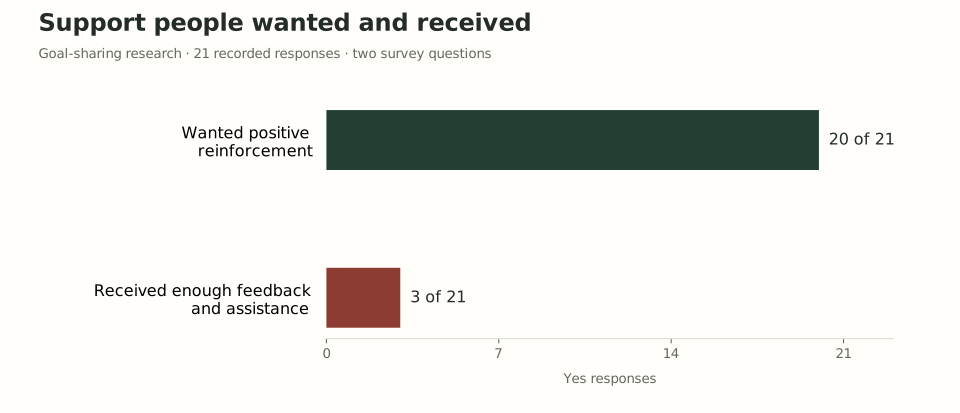
In the goal-sharing and market report, I examined conversation, Instagram, and Facebook as existing ways to share goals. The initial table contained 21 responses about sharing, reinforcement, and whether people received enough help.
A follow-up examined concerns such as fear of judgment, failure, and changing goals, along with interest in exchanging advice. The findings pointed toward a less intimidating environment with peer support.
Goal timing: investigate occasions and motivations
The second study examined goal setting around holidays, religious occasions, and other purposes. I allowed multiple answers and used participant discussions to explore motivation, goal complexity, simultaneous goals, and the role of shared occasions.
The goal-timing table records 29 people. The two reports’ samples are described separately rather than treated as one combined participant group.
Revising the question when participants interpreted it differently
Some participants did not recognize holiday or religious commitments as goals. I revised the wording and added explicit multiple-choice examples to make the behavior clearer.
That revision changed how I interpreted the original responses and led to a recommendation to revisit earlier findings with the clearer question.
Translating the findings into product recommendations
I recommended stronger community support, peer reinforcement and advice, and guidance for following through on ambitious or multiple goals. An assistant was one proposed completion-support direction, rather than an implemented feature.
Outcome
Research findings and a better-defined next study
Two authored reports with response analysis, an instrument revision, and product recommendations for community and completion support. The work established research directions; it did not measure the results of launching those proposed features.
Let’s connect
What could work better?
I’m interested in AI innovation and solutions roles where research becomes useful systems.